

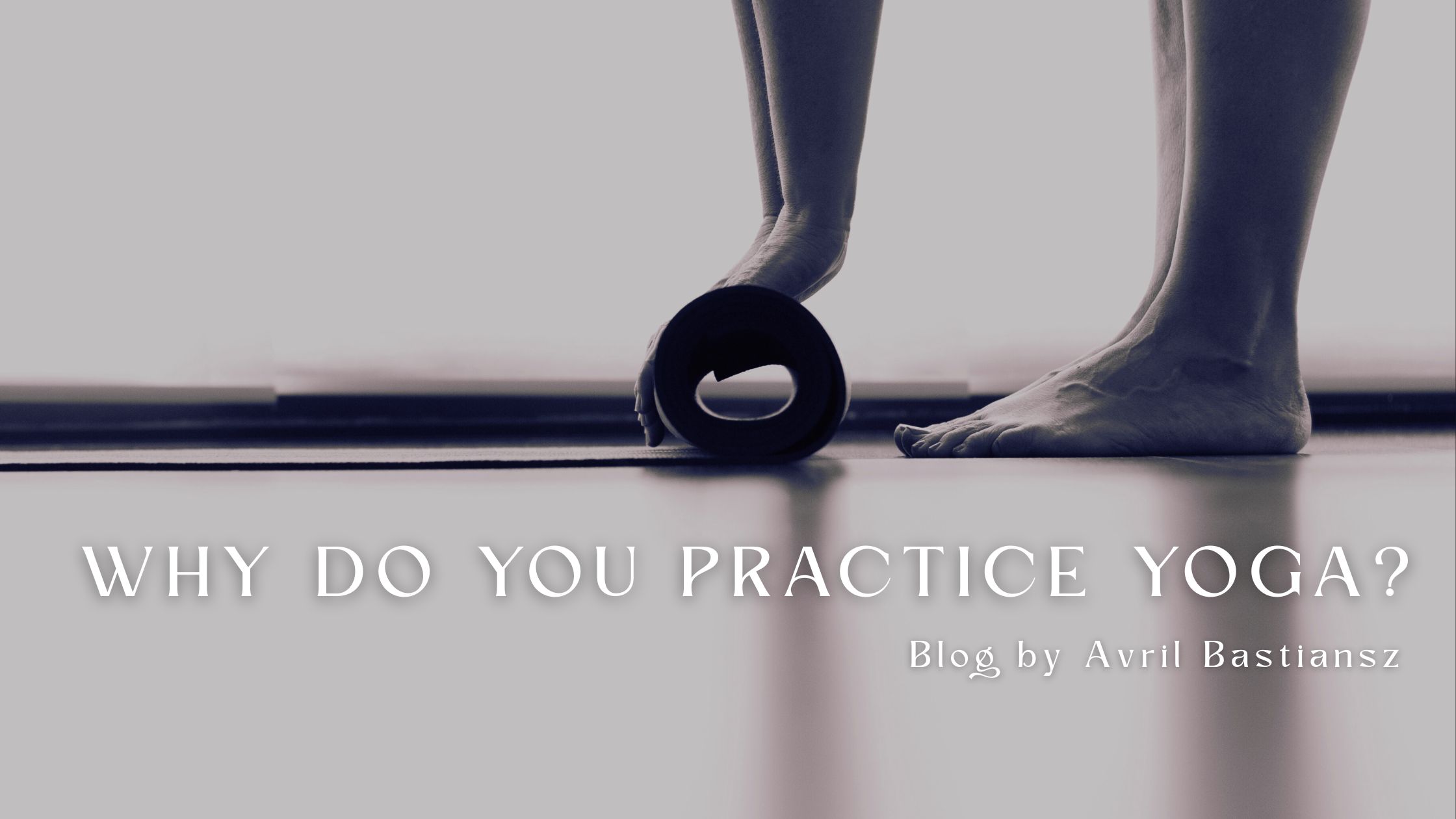
Why Do You Practice Yoga? By Avril Bastiansz
I often ask my students this question: Why do you show up on your mat?
What is your intention – your saṅkalpa?
For some, the answer is physical: to stretch, strengthen, or feel healthier. For others, it may be emotional: to calm the mind or find relief from stress. All of these reasons are true. Yet yoga, in its fullness, points to something deeper.
Yoga as a Path of Self-Awareness
Yoga is both a state of Being and a system of practices.
It is a path of self-awareness that leads us toward self-transformation and, ultimately, Self-realisation. Yoga is not only about movement or breath, but about stillness, clarity, and awakening to the essence of who we are.
Through practice, we come to experience that state of Being as our essence nature.
The Sutras as a Map
The word sutra means “thread.” A sutra is a short, concentrated statement that holds vast meaning in just a few words. Each one is like a pearl, a single piece of the greater puzzle, and when linked together they form a complete strand of wisdom.
The Yoga Sutras of Patañjali are just this: 195 or 196 concise aphorisms. On their own they are powerful, but their true depth is revealed when read together, like pearls strung on a thread. As a whole, they map the yogic journey – guiding us from practice into transformation, from self-awareness to Self-realisation.
The four chapters (pāda) of the Yoga Sutras chart this progression: the nature of yoga, the discipline of practice, the capacities that may arise, and the freedom of Self-realisation. Together, they provide a coherent guidebook for the path.
The Eight Limbs of Practice
At the centre of this map lies Aṣṭāṅga Yoga, the Eight Limbs: yama, niyama, āsana, prāṇāyāma, pratyāhāra, dhāraṇā, dhyāna, and samādhi. These are not steps to tick off, but interconnected practices that grow together, like an embryo developing in the womb – unfolding in an organic, intelligent, and systematic way.
Samādhi is not the end but the doorway: the settled state of mind that opens into Self-realisation. Here yoga meets Vedānta, where the truth of the Self is revealed.
Walking the Path with a Teacher
The Yoga Sutras are not a text to be fully understood in isolation. Their depth unfolds through commentary, reflection, practice, and lived experience. This is why the teacher–student relationship is so important.
A teacher does more than demonstrate āsana, guide prāṇāyāma, or explain philosophy. They help the student embody the teachings, bringing the wisdom of the Sutras into direct experience. In this way, the map of yoga is no longer abstract but becomes a living guide for transformation.
Why This Matters
In a world of endless choice and distraction, it is easy to move from one practice to another without direction, losing sight of the whole. Without a map, we risk becoming fragmented.
The Yoga Sutras of Patañjali give us that map. They remind us that yoga is not a random collection of techniques, but a coherent, timeless pathway a scientific method: a journey of self-awareness unfolding toward Self-realisation.
So if we return to the question- Why do you practice yoga? – the answer might be this:
Because yoga is the union of individual consciousness with cosmic consciousness.
It is described as the journey of the self, through the self, to the Self.
~ Bhagavad Gita
Practice & Work with Avril
If Avril’s words have inspired you to reflect on your own saṅkalpa, why not join her on the mat or connect with her more deeply?
Avril teaches weekly classes at Kundalini House:
-
Monday 12:30–1:30pm — Hatha Yoga
-
Sunday 5:30–6:30pm — Yin Rest & Restore
-
Sunday 6:40–7:10pm — Vedic Meditation
✨ Avril is also a Holistic Counsellor & Psychotherapist and Clinical Nutritionist, supporting wellbeing from body to mind to spirit.
View the timetable and book your class here — please note, class times may occasionally change, so check the timetable for the most up-to-date schedule.
Learn more about Avril’s work: www.avrilbastiansz.com
Follow Avril on Instagram: @avrilbastiansz


Leave A Comment