

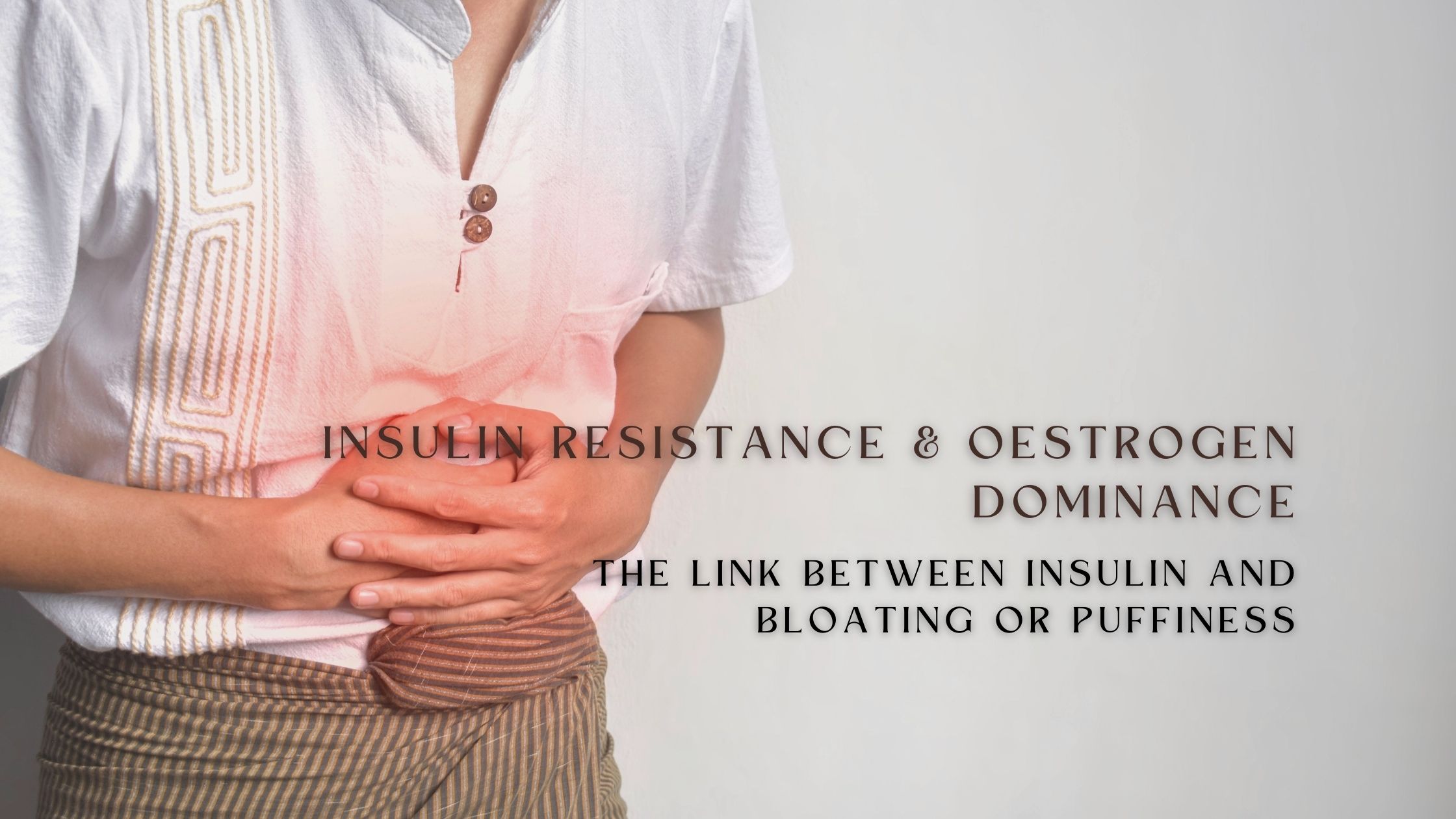
How insulin resistance and oestrogen dominance can lead to fluid retention
Many people notice they feel puffy, swollen, or “water-logged,” especially around their cycle. Two common contributors are insulin resistance and oestrogen dominance, and they often work together.
Insulin resistance means the body isn’t responding to insulin as well as it should, so the pancreas produces more of it. Higher insulin levels tell the kidneys to hold onto sodium, and where sodium goes, water follows — leading to bloating, puffiness, swollen hands or feet, and fluid around the belly.
Oestrogen dominance (or simply having more oestrogen than your body can comfortably manage) can have a similar effect. Oestrogen naturally increases fluid retention, especially in the lead-up to your period. When oestrogen is high and progesterone is low, many people feel more bloated, tender, and inflamed.
When these two happen together, they can amplify each other.
High insulin can increase the amount of active oestrogen in your system, and both can create low-grade inflammation, making your body more likely to hold fluid.
The good news is that small, steady shifts in blood sugar balance — like eating regular protein, moving gently after meals, managing stress, and supporting good sleep — can make a noticeable difference to both insulin and hormone balance.
If fluid retention is showing up for you, we can work with diet, lifestyle, and cycle-aware strategies to help your body feel lighter, clearer, and more regulated.
Lifestyle and therapy options
-
️ Clinical nutrition: stabilise blood sugar, reduce inflammation, balance hormones
-
Yoga: gentle movement to improve circulation, reduce bloating, and support stress management
-
Weight/resistance training: improve insulin sensitivity and overall metabolic health
-
Massage therapy: enhance lymphatic drainage and reduce fluid retention
-
Acupuncture / TCM: support hormone balance, circulation, and stress reduction
-
Naturopathy: personalised lifestyle and herbal strategies for hormone and metabolic support
-
Sleep & stress support: practices to regulate cortisol, reduce insulin spikes, and decrease inflammation
When to see your GP or Primary Health Practitioner — red flags
Most hormonal or insulin-related bloating is harmless, but it’s important to seek medical review if you notice:
-
Sudden or severe swelling, especially if it comes on quickly
-
Swelling only on one side of the body (e.g., one leg or foot)
-
Shortness of breath, chest pain, or difficulty breathing
-
Rapid, unexplained weight gain over a few days
-
Persistent swelling that doesn’t improve with rest, elevation, or self-care
-
Swelling accompanied by high blood pressure, headaches, or vision changes
-
A history of heart, kidney, or liver issues, with new or worsening swelling
-
Fluid retention combined with significant fatigue, low mood, or heat/cold intolerance (which may suggest thyroid issues)
If any of these apply, it’s important to check in with your GP or Health Practitioner to rule out other causes and ensure you’re getting the right support.
Support for Fluid retention
At Kundalini House, we support fluid balance, digestion, and hormonal health from multiple angles. Yoga helps calm the nervous system and encourage healthy lymph flow, reducing that heavy, swollen feeling. Acupuncture and Chinese Medicine work to rebalance qi, support digestion, and reduce inflammation—often easing bloating fast. Massage enhances circulation and lymphatic drainage, helping the body release excess fluid naturally. Our Clinical Nutrition & Naturopathy team can guide you with personalised food and lifestyle strategies to steady blood sugar and support hormone balance. And Strength Training and Pilates help build muscle, improve insulin sensitivity, and keep fluid regulation steady. All together, these therapies offer a holistic, gentle way to reduce puffiness and feel more at home in your body.
ACUPUNCTURE & CHINESE MEDICINE
OUR YOGA & MOVEMENT STUDIO TIMETABLE
References
-
DeFronzo RA, et al. “Insulin resistance: a multifaceted syndrome.” International Journal of Obesity. 1993. LINK
– Explains how elevated insulin increases renal sodium retention → fluid retention. -
Brands MW. “The kidney and sodium handling in diabetes.” American Journal of Physiology. 2016.
– Details insulin’s role in renal sodium reabsorption. -
Stachenfeld NS. “Sex hormone effects on body fluid regulation.” Exercise and Sport Sciences Reviews. 2008.
– Reviews how oestrogen increases fluid retention and vascular permeability. -
Santoro N, et al. “Estrogen and fluid balance.” Endocrine Reviews. 1995.
– Classic review on the relationship between oestrogen, aldosterone, and water retention. -
Rahmani N, et al. “Aromatase and oestrogen dominance in the luteal phase.” Journal of Clinical Endocrinology & Metabolism. 2019.
– Modern evidence on oestrogen-related premenstrual symptoms, including bloating. -
American College of Sports Medicine. “ACSM’s Guidelines for Exercise Testing and Prescription.” 10th ed.
– Evidence for resistance training improving insulin sensitivity and reducing inflammation. -
Cramer H, et al. “Yoga for metabolic health.” Complementary Therapies in Medicine. 2016.
– Yoga shown to improve insulin sensitivity and lower stress-related cortisol → reduces bloating. -
Lee MS, et al. “Acupuncture for obesity and metabolic syndrome.” Autonomic Neuroscience. 2010.
– Acupuncture may influence insulin regulation, inflammation, and fluid balance. -
Field T. “Massage therapy research review.” Complementary Therapies in Clinical Practice. 2014.
– Massage shown to reduce cortisol, improve circulation, and reduce swelling. LINK




Leave A Comment