

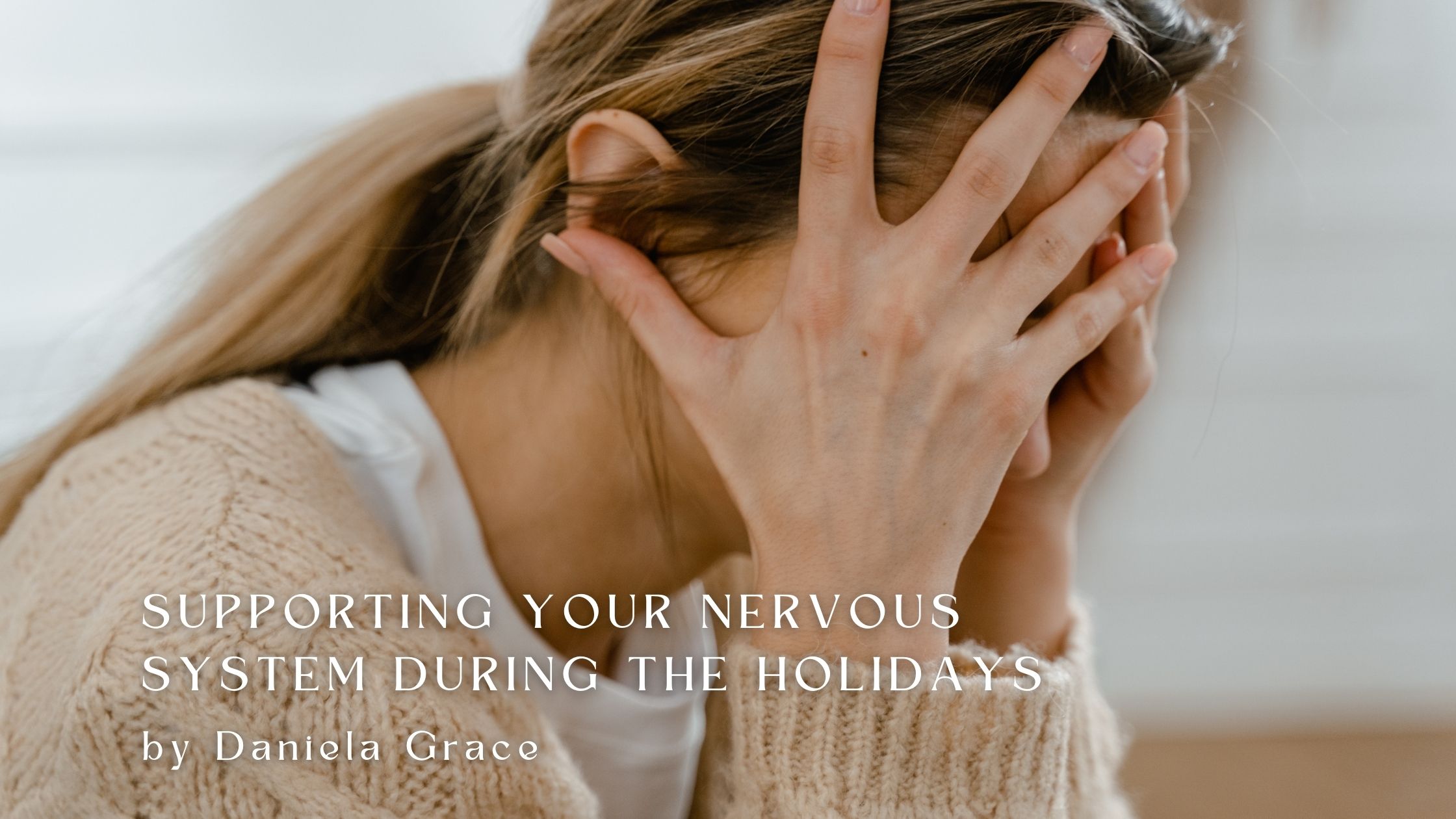
There’s a particular tension that often arrives with the holidays, sometimes before the decorations even come out. Many people feel it in their bodies first: a tight chest, shallow breath, irritability, or a quiet sense of dread that’s hard to name.
While Christmas is sold as a season of ease and connection, for many it’s one of the most activating times of the year. This is especially true for those living with body image distress or navigating eating disorder recovery. At its core, this isn’t a personal failing. It’s a nervous system responding to familiar cues.
Why the Holidays Can Feel So Hard
Holidays disrupt rhythm. Sleep changes. Meals change. Routines fall away. Add social gatherings, family expectations, and pressure for things to feel “special,” and the nervous system can quickly move out of regulation.
When the body senses emotional threat or uncertainty, it looks for safety. For some people, that safety has historically been found through control, vigilance, or self-criticism. This is why body image distress often intensifies. The mind narrows its focus:
- How do I look?
- What should I eat?
- How do I avoid judgment?
These are protective responses, not superficial concerns.
Food, Bodies, and Old Survival Patterns
For those in eating disorder recovery, the holidays can feel particularly challenging. Food is everywhere, conversations often centre on eating or weight, and cultural messages encourage extremes, restriction before, compensation after. If urges to restrict, binge, or compensate resurface, it doesn’t mean you’ve failed. It often means your nervous system is under strain. Patterns around food and body image are rarely just about food. They’re about how we learned to cope, belong, and stay safe.
Family of Origin Triggers
Time with family of origin can quickly bring old roles back online , the responsible one, the peacekeeper, the invisible one. Often it’s not what’s said, but what’s unspoken: who gets heard, who holds the emotional load, what can’t be named. Even well-meaning comments about food or appearance can land deeply if similar messages were present earlier in life. Your nervous system remembers these dynamics through sensation and emotion, not logic.
When Christmas Isn’t What It ‘Should’ Be
Many people carry a quiet grief at this time of year, disappointment that Christmas doesn’t feel warm, connected, or safe. Loneliness can exist even in company. Pressure to perform happiness can be heavy.
These feelings are deeply human, especially when holidays once represented hope or repair.
Supporting Your Nervous System
Rather than pushing through, try orienting toward support:
- Slow your breath and feel your feet on the ground
- Take breaks from stimulating or triggering spaces
- Soften expectations of yourself and others
- Meet old patterns with compassion
- Remember you have choice, including leaving early or doing things differently
- Small acts of regulation matter.
You Don’t Have to Do This Alone
If the holidays reliably bring up body image distress, food struggles, or old family wounds, support can make a meaningful difference. Somatic psychotherapy works with these experiences at the level they live, in the body and nervous system.
If you’d like support during the holiday period, you’re warmly invited to book a session and explore what’s coming up for you in a steady, compassionate space.
by Daniela Grace
Daniela Grace holds a Honours Degree in Social Science, a Graduate Diploma in Counselling, and is a Graduate of Somatic Psychotherapy from the Hakomi Institute.
Daniela is a somatic psychotherapist and a couples counsellor, based on the Merri Creek in Naarm / Melbourne. Her path into somatic psychotherapy arose from her own deep healing journey spanning nearly three decades. Drawing from the Hakomi Method, her practice integrates mindfulness and body-based awareness to support trauma healing, nervous system regulation, and authentic self-expression. She offers therapy for both individuals and couples, in-person at Kundalini House in North Fitzroy and online.


Leave A Comment