

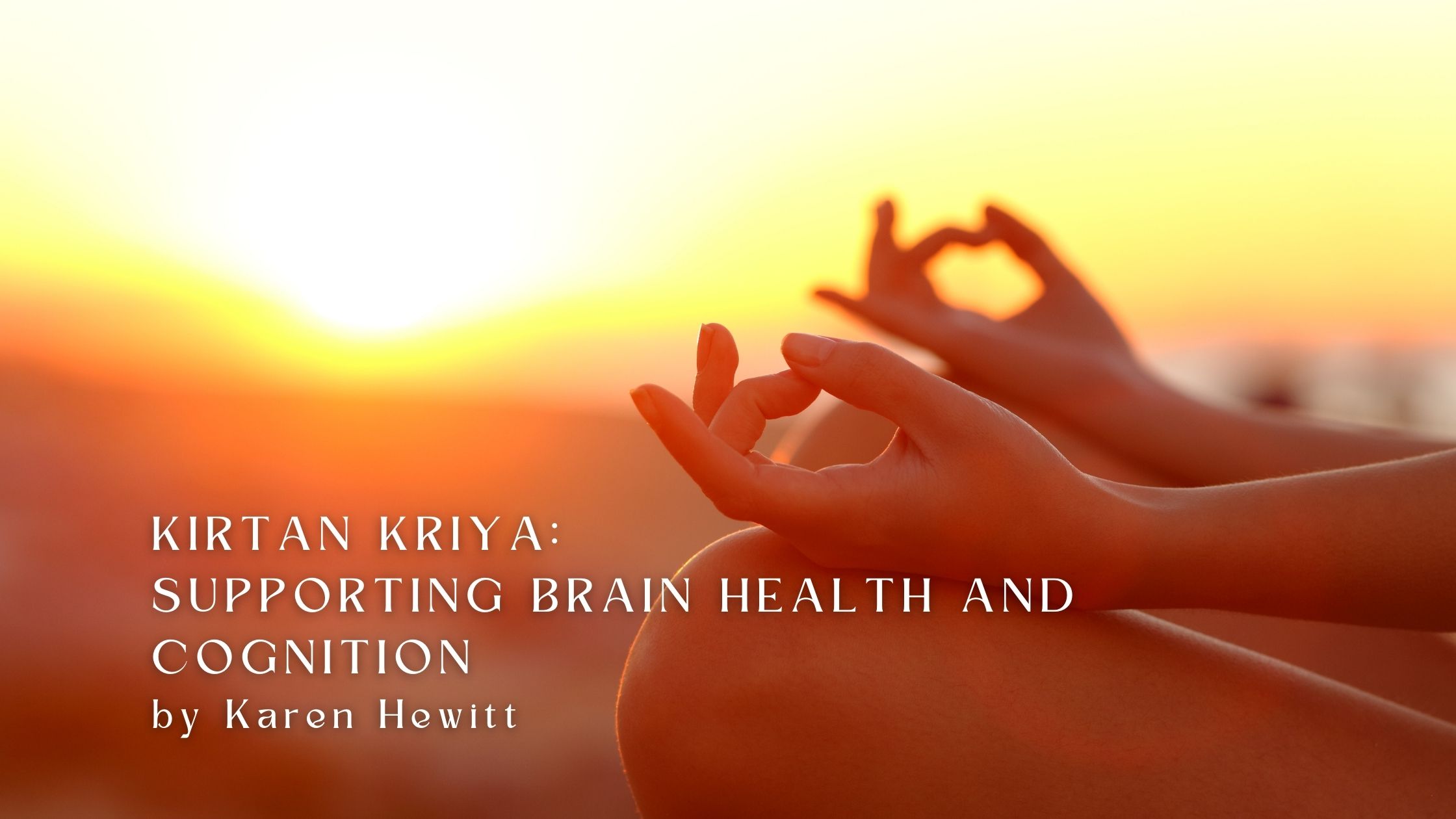
Can 12 Minutes of Kirtan Kriya Support Brain Health and Reverse Cognitive Decline?
Science, Practice, and Lived Experience
By Kundalini Yoga Teacher, Karen Hewitt
As a Kundalini yoga teacher, I am deeply curious about the science behind the practices we teach. I love the places where ancient wisdom and modern research meet, because they bring credibility, clarity, and confidence to practices that have long been passed down through experience alone.
Kirtan Kriya is one of those practices.
During my Kundalini teacher training, I committed to practicing Kirtan Kriya daily for 90 days. I kept weekly notes, tracking changes in my body, mind, and nervous system as they unfolded. At the time, I had not yet studied the research. Later, when I began reading scientific literature on this meditation, I was struck by how closely my observations aligned with what researchers have documented.
This blog is an exploration of that intersection.
What Is Kirtan Kriya?
Kirtan Kriya is a meditation from the Kundalini yoga tradition that combines mantra, sound, breath, and mudra. The mantra Saa Taa Naa Maa reflects the cycle of life, birth, life, death, and rebirth. The meditation is typically practiced for 12 minutes and involves chanting the mantra aloud, whispering it, and silently repeating it while touching the fingertips in sequence.
From a neurological perspective, this practice engages multiple regions of the brain at once, including areas related to memory, focus, sensory integration, and emotional regulation.
What the Research Says
A peer reviewed article published on PubMed examined meditation practices, including Kirtan Kriya, in relation to its benefits in addressing cognitive decline and Alzheimer’s disease risk. The article focused on patients with subjective cognitive decline, mild cognitive impairment, and chronic stress, all of which are associated with increased dementia risk.
Some of the most notable findings for participants who practiced Kirtan Kriya for just 12 minutes per day for 12 weeks include:
improvements in memory and cognitive performance in individuals at risk for Alzheimer’s disease.
reduced stress, anxiety, and depressive symptoms, as well as improved sleep quality.
Researchers observed changes at the genetic level, including down regulation of inflammatory genes and up regulation of immune system related genes.
In addition to the above benefits, one of the most striking findings was a 43 percent increase in telomerase activity, an enzyme associated with cellular aging and longevity. This is the largest increase in telomerase activity reported in meditation research to date.
While this review does not claim a cure for dementia, it does suggest that consistent meditation practices like Kirtan Kriya may support brain health, cognitive resilience, and biological processes related to aging.
Kirtan Kriya and Modern Brain Health Conversations
Kirtan Kriya has also entered modern conversations around brain health. In an episode of the Diary of a CEO podcast, psychiatrist and brain imaging specialist Dr Daniel Amen references Kirtan Kriya as a daily meditation practice that has been studied in relation to memory and Alzheimer’s disease.
He highlights its simplicity and notes that it takes just 12 minutes a day, making it accessible even for people with busy lives. Dr Amen discusses research showing that this meditation is associated with increased activity in the brain and improvements in memory, particularly in older adults and those at risk for cognitive decline.
What stands out in his discussion is the emphasis on consistency rather than complexity. A short, structured practice done daily can support brain health in meaningful ways.
My 90 Day Experience
During my teacher training, I practiced Kirtan Kriya daily for 90 days and recorded weekly reflections. This was a personal, non-clinical experience, and I share it as such.
Over time, I noticed increased mental clarity and a greater ability to focus. My thoughts felt more organised and less scattered. This mirrors the improvements in cognitive function described in the research.
I also observed changes in my stress response. In situations that previously felt stressful, I felt calmer. My sleep quality improved, and I felt more regulated emotionally. These experiences closely align with the study findings related to reduced anxiety, improved mood, and better sleep.
Physically, I became more aware of subtle sensations in my body and felt a growing sense of nervous system balance. The changes were not dramatic or immediate. They were gradual, cumulative, and noticeable only when I looked back at my notes over time.
What struck me most was how small, consistent daily effort created meaningful shifts.
Why This Practice Matters
Kirtan Kriya offers a rare combination of accessibility and depth. It is both spiritually rich and scientifically supported. It does not ask us to choose between intuition and evidence.
For those interested in cognitive health, nervous system regulation, or long-term brain support, this practice offers a simple place to begin. The research suggests that even brief daily meditation can influence stress physiology, immune function, and markers related to aging.
How to Practice Kirtan Kriya
Position: Sit comfortably with a straight spine, either on the floor or in a chair.
Meditate at the brow point
Chant, “Saa Taa Naa Maa”. As you chant each sound, alternate through four mudras (hand movements):
Mudra: Rest hands on knees, using light pressure and
- On Saa: touch together thumb and index finger
- On Taa: touch thumb and middle finger
- On Naa: touch thumb and ring finger
- On Maa: touch thumb and little finger
A traditional 12-minute practice follows this structure:
- Two minutes chanting out loud
- Two minutes whispering
- Four minutes silently repeating the mantra
- Two minutes whispering
- Two minutes chanting out loud
Kirtan Kriya (short version) by Nirinjan Kaur on Spotify is a great track to keep you inline.
Consistency matters more than intensity. The studies and my own experience both point to regular daily practice as the key factor in creating change.
Closing Reflection
Our brains and bodies are shaped by what we do consistently. Sound, breath, movement, and attention all influence how we age, adapt, and respond to life.
This study on Kirtan Kriya is one example of a bridge. A bridge between ancient yogic wisdom and modern neuroscience. Between personal experience and measurable data. Between the spiritual and the physiological.
If you feel curious, try it gently and consistently, and observe what unfolds. Your own experience will be the most meaningful evidence of all.
Practicing at Kundalini House
As part of our ongoing meditation focus for the year ahead, we’re holding Kirtan Kriya as a simple, steady invitation to support clarity, resilience, and nervous system health over time. You can read more about this year-long meditation invitation here.
Kundalini Yoga weaves together pranayama, kriya, rhythm, mantra, and meditation to create an integrated practice that supports vitality, awareness, and self-connection. Classes offer a structured yet adaptable approach, drawing on both ancient yogic technology and contemporary understandings of how breath, movement, and sound affect the nervous system.
If you’d like to practice with us, you’re warmly invited to join a Kundalini Yoga class in studio or online — view the timetable here.




Leave A Comment