
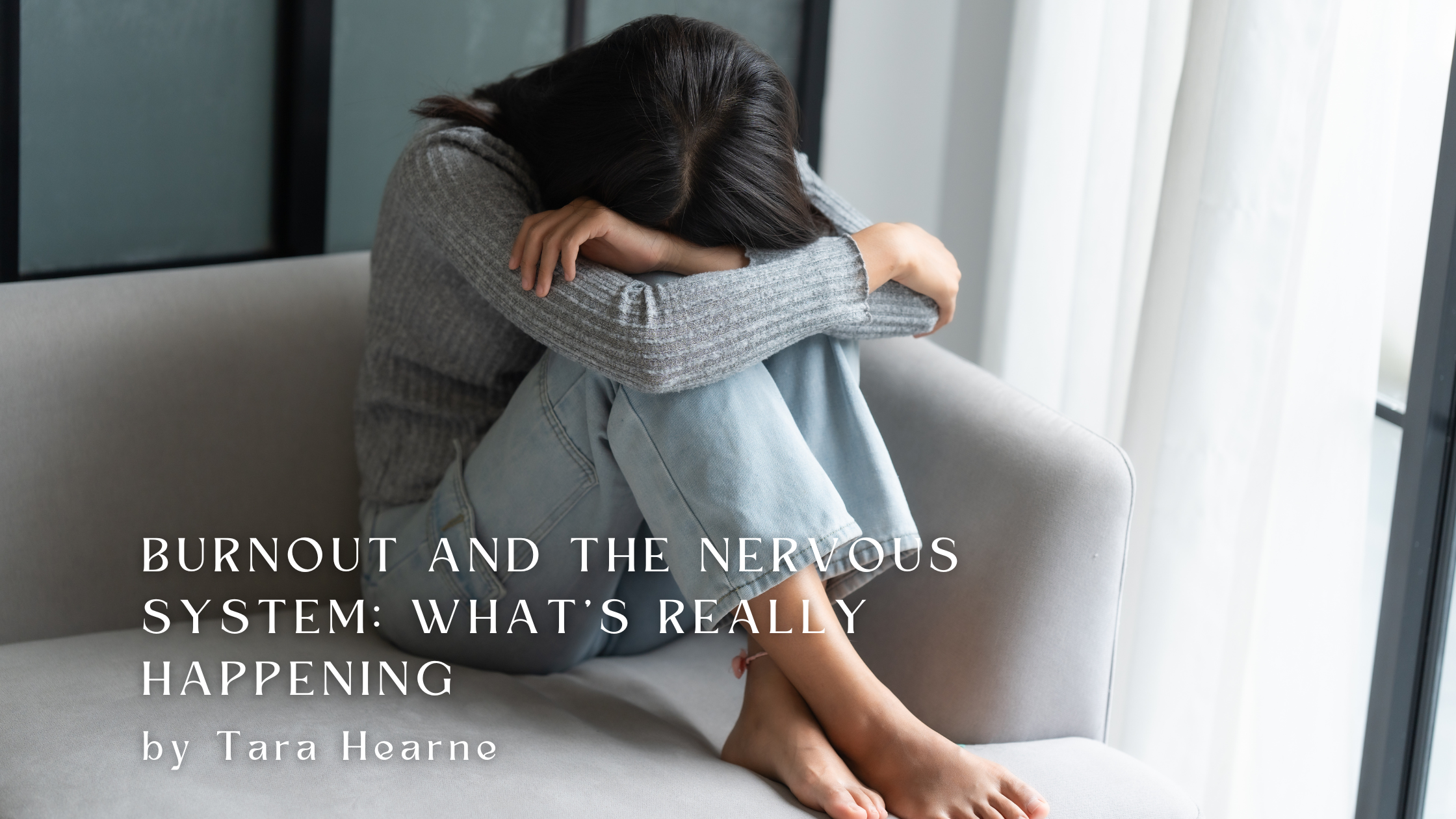
Burnout and the Nervous System: What’s Really Happening
by Tara Hearne
Burnout Isn’t a Personal Failure; It’s a Nervous System Issue!
Burnout doesn’t always look dramatic Sometimes it shows up as keeping up with work, caring for others, and getting things done, all while quietly feeling depleted and exhausted inside. You may be functioning, even appearing “fine” to those around you, yet something feels off. Joy feels harder to access. Rest doesn’t fully restore you. Everything seems to take more effort than it once did.
If this resonates, know that you are not alone and you are not failing.
The Quiet Exhaustion We Don’t Talk About
Many people experiencing burnout don’t collapse or stop functioning. They keep going. They meet obligations. They push through, often because they are capable, caring, and used to being the one others rely on.
But internally, there can be a growing sense of disconnection: from energy, enthusiasm and even from yourself. This kind of burnout can be difficult to name, which makes it easy to dismiss or minimise. You might tell yourself you just need a holiday, better routines, or more discipline. But burnout isn’t a motivation problem or a character flaw.
Burnout Is Not Laziness, Weakness, or a Lack of Self-Care
Burnout isn’t caused by a lack of willpower or effort. In fact, it often affects people who have been trying very hard for a very long time.
At its core, burnout is a sign of a chronically overloaded nervous system. When your system spends too much time in survival mode; managing ongoing stress, responsibility, or pressure, it eventually loses its ability to regulate. The body remains on alert, even when the immediate stressors ease.
One of the most confusing aspects of burnout is that rest doesn’t always help. You might take time off, sleep more, or slow down yet still feel wired, flat, or unable to fully relax. That’s because rest without safety doesn’t restore. When the nervous system doesn’t feel safe, it can’t fully shift out of survival mode. Even in quiet moments, the body may remain hypervigilant.
What’s Happening in the Body
Burnout is a state of physical, mental, and emotional exhaustion caused by prolonged and excessive stress.
Physiologically, burnout is associated with overactivation of the sympathetic nervous system, which governs the fight-or-flight response. This leads to elevated stress hormones such as cortisol and adrenaline circulating in the body. Over time, this sustained activation disrupts the body’s natural balance and contributes to a wide range of physical, emotional, and psychological symptoms.
Signs of Burnout
- Feeling exhausted but restless, agitated, or unable to switch off
- Difficulty falling or staying asleep, or waking unrefreshed
- Tension held in the jaw, neck, or shoulders
- Digestive disturbances such as bloating
- Getting sick more often or taking longer to recover
- Emotional numbness or feeling flat
- Irritability or withdrawing from others
- Loss of joy in things you once enjoyed
- Feeling disconnected from your body, emotions, or sense of self
These are not personal failures. They are messages from a nervous system that has been under sustained strain.
What Actually Helps Burnout Heal
Healing burnout isn’t about pushing harder or fixing yourself. It’s about creating the conditions in which your nervous system can begin to settle, regulate, and recover.
Supportive approaches include:
- Daily Nervous System Support
Gentle, consistent practices help the body feel safe and supported, encouraging the nervous system to settle and regulate. This can include slow, mindful breathing, walking, stretching, yoga, sound healing, or simply spending time in nature.
- Stress Management Practices
Mindfulness, journaling, and breathwork support nervous system regulation by helping the body slow down and respond more consciously to stress.
- Naturopathic Support
Supporting the body with nutrition, herbal medicine, and lifestyle foundations can help restore depleted systems and support nervous system regulation. This may include:
- Diet: eat a balanced, nourishing diet. Avoid skipping meals or fasting, as this can increase stress hormones and further dysregulate the nervous system.
- Herbal medicine: calming herbs such as chamomile, lemon balm, or passionflower; and adaptogens like ashwagandha, rhodiola, or Siberian ginseng to support stress resilience.
- Lifestyle foundations: gentle movement, time in nature, sleep hygiene, and reducing overstimulation.
- Energy Healing
Energy healing can support parasympathetic (rest-and-digest) nervous system regulation, helping to promote a sense of grounding, relaxation, emotional processing, and reconnection with the body.
- Boundaries
Burnout often develops where over-responsibility, perfectionism, and people-pleasing patterns create ongoing self-pressure. Learning to set clear, compassionate boundaries helps the nervous system feel safer and supports healing.
- Professional Support
Burnout isn’t something you’re meant to navigate alone. Receiving emotional, physical, and energetic support helps the nervous system learn that it no longer has to carry everything by itself.
A Gentle Invitation
If you recognise yourself in this, know that nothing has gone wrong with you. Burnout isn’t a personal failure, it’s information. With the right support, it can become a turning point rather than a breaking point.
This kind of nervous system informed holistic healing; incorporating naturopathy, coaching, and energy healing is what Tara supports people with at Kundalini House.





Leave A Comment