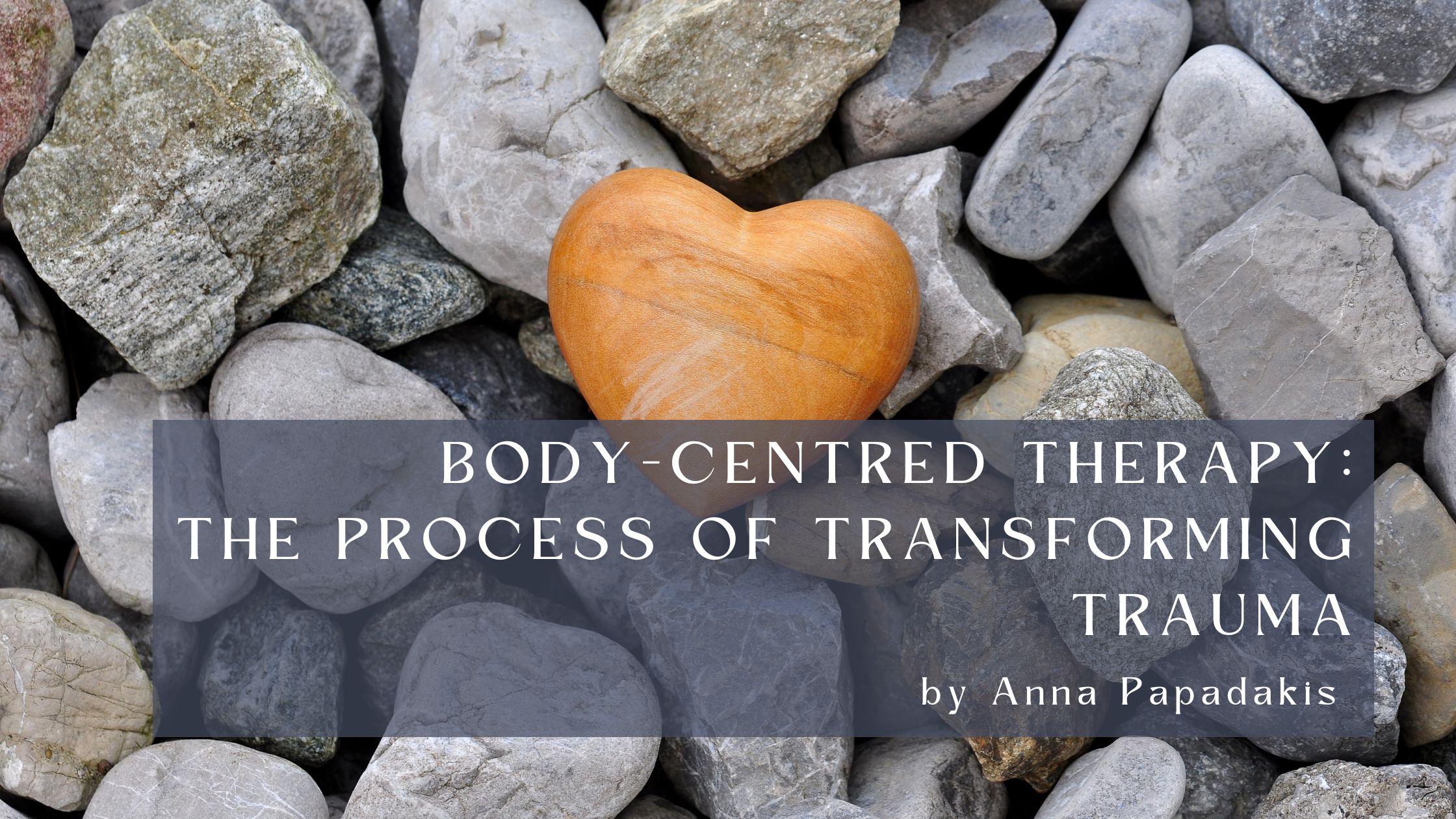
Body-Centred Therapy – The Process of Transforming Trauma
by Anna Papadakis
Kundalini House Fitzroy North
Most of us believe we are feeling our feelings—yet often, we are thinking them instead, while the body continues to speak in sensation beneath our awareness.
The body is always communicating. The question is whether we know how to listen.
In body-centred therapy—what I call body listening—we begin by recognising that different aspects of our experience speak different languages. The mind speaks in words, stories, and interpretations. The body speaks in sensation.
While most of us are well-practised in listening to the mind, we are far less familiar with listening to the body. To listen to the body is to feel sensation directly, without immediately turning it into a story.
This distinction matters.
When someone says, “I feel anxious,” what is often happening is that a sensation arises in the body, the mind interprets it, and a label is applied. Attention then shifts toward thinking about anxiety, rather than feeling what is actually present.
But the feeling is not the label.
The feeling is the sensation itself.
If we pause and gently ask, What am I noticing in my body right now? we may become aware of a tightness in the chest, a constriction in the throat, or a subtle movement in the belly. This is where listening begins.
Body Listening and Somatic Awareness
To feel, in this sense, does not mean to endure or push through discomfort. It is not about “sitting with” something in a way that involves bracing or tolerating.
True feeling is simpler—and more immediate. It is the willingness to allow sensation to be exactly as it is, without needing to fix, change, or understand it.
This is unconditional presence. Unconditional presence is love.
In this way, feeling becomes listening.
And listening becomes a direct relationship with the body.
As this capacity develops, our awareness naturally begins to widen. We start to notice not only sensation, but also thoughts, images, memories, and associations arising alongside it. We may observe what we are telling ourselves, what sits quietly in the background, or what something reminds us of.
Rather than focusing on a single layer, we begin to experience multiple layers at once.
These layers are not random. They are connected. Sensation, thought, emotion, and memory often point toward a shared underlying thread—frequently shaped by past experience, trauma, or unmet need.
Body-Centred Therapy and Trauma Healing
Accessing this depth of awareness can be difficult on our own. Within a therapeutic container, it becomes more available through attuned presence and supportive approaches—such as Emotional Freedom Technique or subtle, integrative bodywork—which help the nervous system feel safe enough to open.
When the system feels safe, something important begins to happen.
We start to sense what is true.
Not as an idea, but as a felt experience. There is a deeper aspect of ourselves that recognises truth instantly. When something resonates, it is met with a quiet internal “yes”—a clear, embodied confirmation.
I often refer to this as the part that knows.
This aspect of us holds our experiences, memories, unmet needs, and inherent wisdom. It does not rely on external validation. It informs directly, through resonance.
When we come into contact with this knowing, there is often a sense of settling or arrival. From here, what is needed begins to emerge naturally—insight, clarity, compassion, relief. Because it arises from within, it restores trust in oneself.
The Alchemical Process of Transformation
This is where transformation becomes alchemical, where the coexistence of many elements transmutes into something entirely new.
Change does not happen through force or analysis, but through the relationship between sensation, awareness, and presence. When these come together—without pressure or agenda—the system is given the conditions it needs to reorganise itself.
Because this change and newness arises from within our own system, it carries an inherent trustworthiness—the changes it brings require no force.
Nothing needs to be made to happen.
The shift occurs because the conditions are right.
Through this kind of listening, unmet needs begin to be recognised—and in being recognised, they start to be met. The body’s natural capacity for healing comes online. Patterns soften. Insight deepens. Something releases.
This process cannot be imposed. It can only be supported through presence.
And this is the essence of body-centred therapy: not fixing, but listening deeply enough for the body to reveal what it already knows.
From here, healing is not something we do.
It is something that unfolds.
About the Author
Anna Papadakis is a body-centred therapist based in Melbourne, Australia. Her work is grounded in the understanding that unconditional presence is the form of love that meets unmet needs. From this foundation, the body’s natural intelligence is able to transform trauma and open new pathways for possibility.
Connect with Anna Papadakis
If you feel called toward deep repair, embodied healing, and reintegration, Anna offers body-centred therapy and complementary modalities to support your return to yourself.
Body-Centred Therapy · Emotional Freedom Technique · Somatic Healing
👉 Learn more about Anna Papadakis: here
For session details, availability, and bookings, please get in touch or explore further.



Leave A Comment